
2026-04-16 · 11 min read
Custom Ecommerce vs Shopify
Custom ecommerce vs Shopify: when a hosted storefront is enough, and when catalogue, B2B pricing, or operations need a platform from scratch.
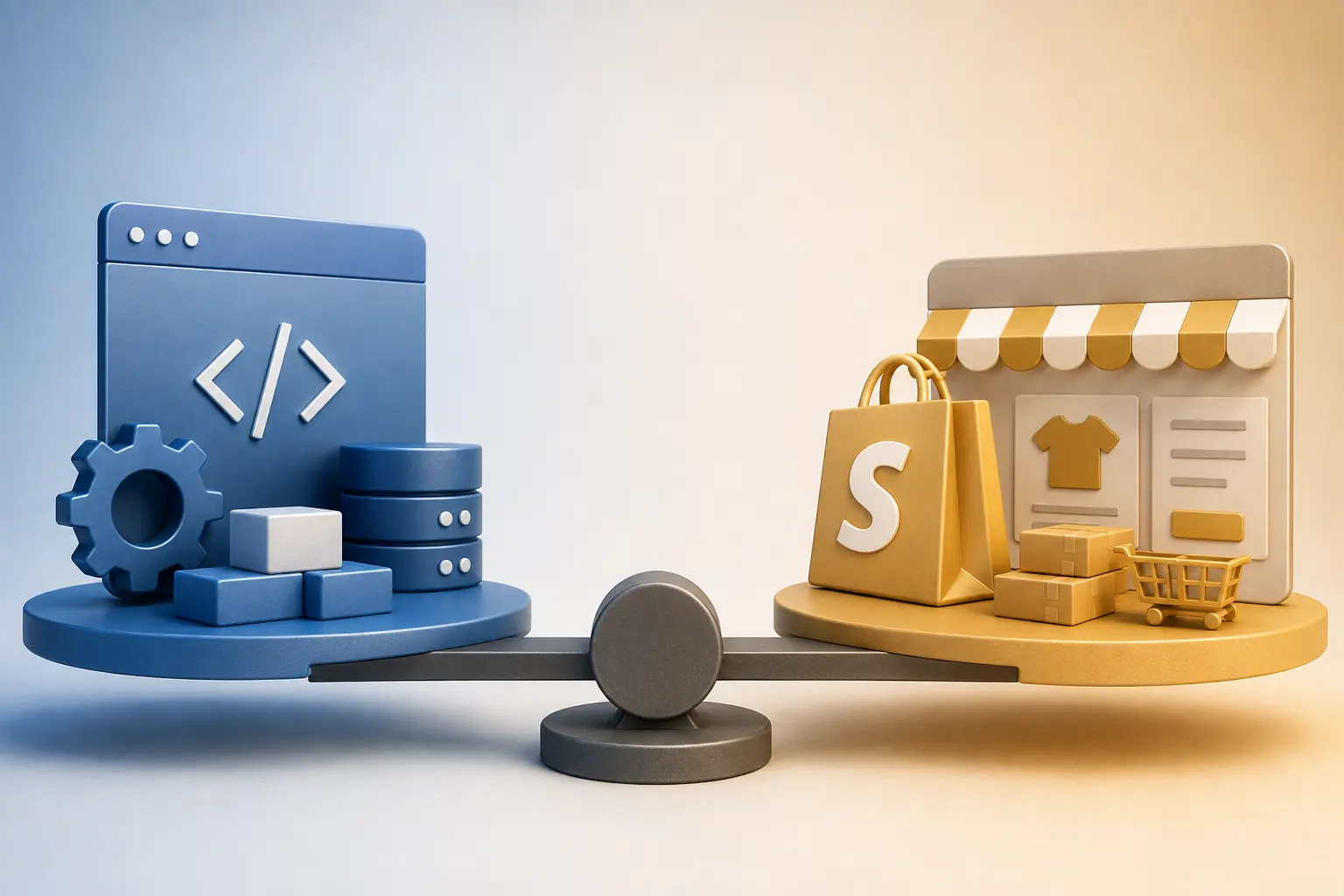
Shopify is an excellent product for merchants whose model fits a hosted store: catalogue, cart, checkout, apps. Custom ecommerce development is for businesses that need the commercial logic to live in software they control — especially B2B, unusual fulfilment, or pricing that apps cannot express cleanly.
We do not implement Shopify or WordPress stores. If Shopify is the right product, you should use a Shopify partner. If it is not, you need a platform, not another app.
The decision is commercial fitness. Theme quality and app count are distractions once pricing, catalogue rules, or fulfilment start fighting the platform.
Where Shopify is the right default
Standard retail catalogues, mainstream checkout, and a team that is happy to operate inside Shopify admin. App costs are acceptable. Theme constraints are acceptable. You do not need customer-specific price lists, multi-entity inventory, or checkout rules that fight the platform.
Direct-to-consumer brands with conventional products, subscriptions handled by established apps, and growth that fits Shopify’s operational model should stay. Speed to launch and managed hosting are real advantages.
Even some B2B sellers fit: fixed company price lists, simple wholesale catalogues, and checkout that does not need multi-approver logic. Evaluate the platform’s native B2B features before assuming you must build.
Where custom ecommerce is the product
B2B pricing, contract catalogues, regional tax and shipping that is not a plugin away, wholesale and retail in one operational flow, or checkout that has to encode business rules rather than coupons.
At that point you are no longer 'customising a store'. You are bending a generic commerce engine until the next app update breaks the bend.
Other hard edges: configure-to-order products, real-time ERP pricing during cart calculation, multi-branch buying groups with budget controls, and purchase-order workflows with approval thresholds. Those are commercial systems, not theme projects.
Ownership of the stack
A custom platform is software built for your business, with optional maintenance after launch. You are not renting the core checkout from a hosted platform, and you are not assembling a store from plugins.
Contractual ownership of source code is defined in the client agreement. The commercial point is simpler: the store is not limited to another vendor's product roadmap.
Ownership also means responsibility: security patches, dependency updates, and payment credential hygiene. Plan maintenance. A custom store without an operating model is a liability dressed as independence.
Middle paths that still fail for some models
Headless storefronts with a hosted commerce backend can improve UX while keeping platform checkout and catalogue. That helps when presentation is the constraint.
It does not help when the constraint is commercial logic the backend cannot express. If pricing math, inventory reservation, or approval rules break inside the platform, a prettier frontend will not fix it.
Use the middle path when you like the commerce engine and hate the theme layer. Commission a custom platform when the engine itself is the bottleneck.
Decision
Use Shopify when it already matches how you sell. Commission custom ecommerce development when the business model is the differentiator and hosted apps are the constraint.
If more than about a third of revenue depends on pricing or ordering rules the platform fights, stop adding apps and write the rules you actually need. That document is the brief for a custom build — or the evidence you should stay and simplify the commercial model.